



Calculate cost

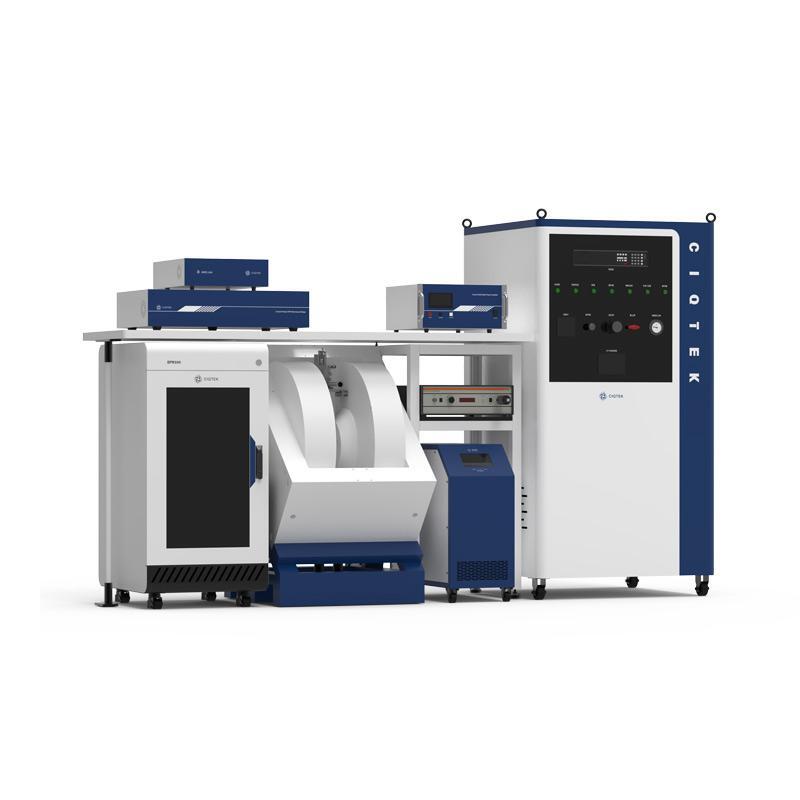
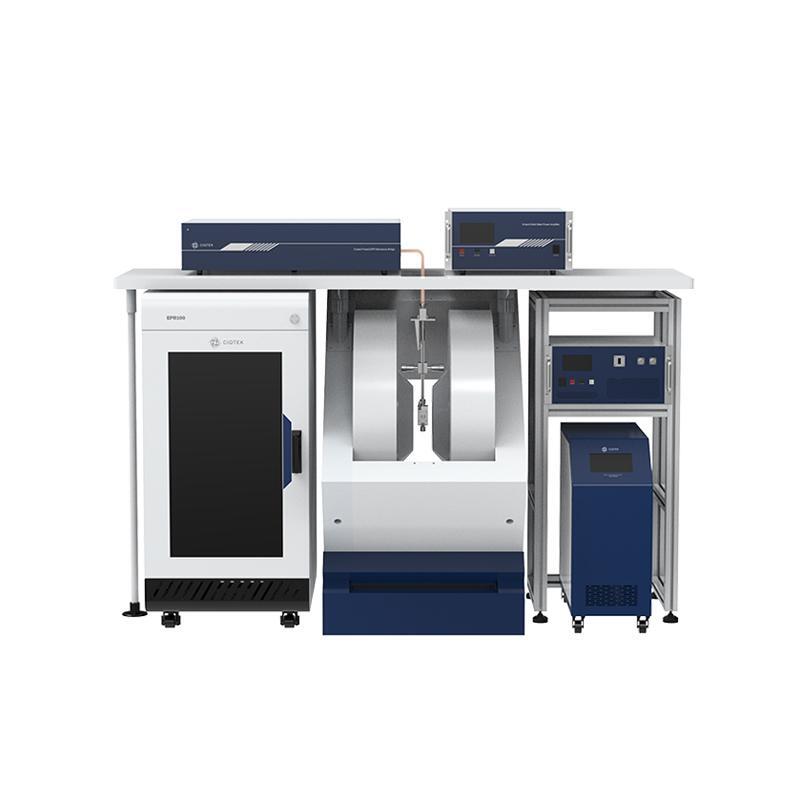
Pulsed electron paramagnetic resonance spectrometer CIQTEK EPR100 (EPR)
Name
E-mail
Phone number
Calculate cost
Manager will contact you and answer all your questions
By clicking the button, you agree to the terms of the privacy policy
Contact me
Name
E-mail
Phone number
Contact me
Manager will contact you and answer all your questions
By clicking the button, you agree to the terms of the privacy policy
Pulsed electron paramagnetic resonance spectrometer CIQTEK EPR100 (EPR)
Calculate cost
Contact me
CIQTEK X-band EPR100 Pulsed Electron Paramagnetic Resonance (EPR) Spectroscopy supports both CW and pulsed EPR functions, satisfying the requirements of general CW EPR experiments in performing T1/T2/ESEEM (Electron Spin Echo Envelope Modulation)/HYSCORE (Hyperfine Sublevel Correlation) and other pulsed EPR tests, which can achieve higher spectral resolution and reveal the hyperfine interactions between electrons and nuclei, thereby providing users with more information about the structure of matter.
Optionally equipped with a 4-300K variable temperature device, enabling the detection of paramagnetic substances at ultra-low (high) temperatures.
Accessories:
Dual-mode resonator; High-temperature system; Variable temperature liquid nitrogen with cryostat; Variable temperature liquid helium; Liquid helium-free dry cryogenic system; Time-Resolved EPR System; ELDOR System; ENDOR System; Goniometers; Irradiation System; Flat Cage.
Functions:
DEER (Double Electron-Electron Resonance) Experiment
By studying electron-electron interactions, it is possible to achieve the determination of the distance between paramagnetic particles in the immediate vicinity of physiological reactions or chemical reaction environments.
ENDOR (Double Electron Nuclear Resonance) Experiment
Hyperfine and nuclear quadrupole moment interactions of electrons with nuclei can be detected.
AWG Function in Combination with Arbitrary Waveform Generator
Arbitrary waveform pulse output can be realized, and the amplitude, phase, frequency, and envelope of the pulse shape can be changed to realize customized and complex pulse experiments.
TR-EPR (Time-Resolved EPR/Transient EPR)
The combination of time-resolved techniques with paramagnetic resonance spectroscopy can be used to study transient processes such as free radicals or excited triplet states during fast reactions.